
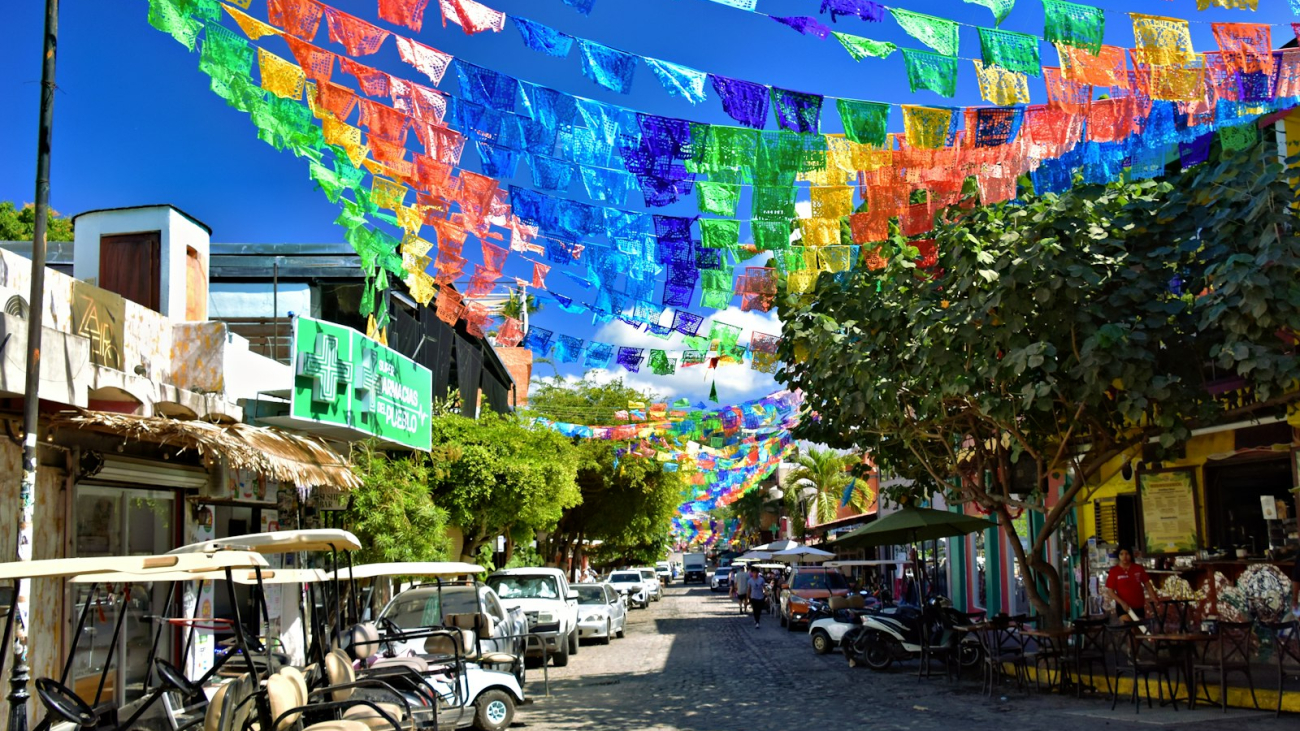
Sayulita is officially a Pueblo Mágico — one of Mexico’s federally recognized “Magical Towns.” It’s a label you’ll see on welcome signs, tourism-board maps and the occasional t-shirt, but most visitors have never been told what it actually means, who decided it, or what changed in town because of it.
What “Pueblo Mágico” Actually Is
Pueblo Mágico is a federal recognition program run by Mexico’s Secretaría de Turismo (SECTUR), launched in 2001 to identify towns with a distinct historical, cultural or natural character that sets them apart from typical destinations. Qualifying isn’t automatic — a town generally needs a population of a certain size, a formally organized local tourism committee, backing from its municipal council and state congress, a documented multi-year tourism development plan, evidence that tourism already contributes meaningfully to the local economy, and adequate health and security services already in place. It’s as much a bureaucratic checklist as a beauty contest.
When Sayulita Got the Title
Sayulita was named a Pueblo Mágico on September 25, 2015, announced by Enrique de la Madrid, then head of Mexico’s federal tourism ministry, with Nayarit’s state tourism secretary Catalina Ruiz accepting on the state’s behalf. A formal plaque was unveiled in Sayulita’s town square that December, with de la Madrid, Ruiz, and the Bahía de Banderas mayor all in attendance. Coverage at the time leaned on Sayulita’s identity as Riviera Nayarit’s “capital of surf” with a laid-back, bohemian character — the town was already well known before the federal label arrived; the designation formalized what visitors had been saying for years.
What It’s Reported to Have Changed
The designation came with a five-year local tourism development plan and a joint state/municipal/civil-society committee to oversee it, plus inclusion in the national Pueblos Mágicos marketing umbrella — the kind of promotional reach a single town could never buy on its own. Most of what’s publicly documented is the plan and the funding commitments rather than an independently audited before-and-after; treat visitor-growth claims tied specifically to the designation as directional rather than verified.
Sayulita in Good Company — and One Surprising Absence
There are now 177 Pueblos Mágicos across Mexico’s 31 states, including well-known names like Tequila, Jalisco (the tequila-producing town) and Tulum, Quintana Roo. One name that surprises people: San Miguel de Allende is not currently a Pueblo Mágico. Guanajuato state pulled it from the program after its 2008 UNESCO World Heritage listing, choosing to lean on UNESCO status instead of the federal tourism label.
The Honest Downside
Recognition and growth arrived together, and travel writers who’ve followed Sayulita for years have written candidly about the tradeoffs: busier streets and beaches in high season, rents and restaurant prices climbing as boutiques and design-forward restaurants replaced some of the old fishing-village storefronts, and infrastructure — sewage capacity in particular — under more strain than it was built for. None of that is a formal government finding, just the recurring theme in independent travel coverage, and it’s worth knowing before you arrive expecting an undiscovered secret. Our own best time to visit guide and safety guide go into how to plan around the busiest stretches.
Our Take
The Pueblo Mágico sign at the edge of town is real, and the story behind it is more interesting than most visitors realize — but it’s a federal marketing and development program, not a guarantee of an untouched village. Sayulita earned its reputation first; the label just made it official. If you want the fuller picture of what the town is like today, start with our Sayulita travel guide.