
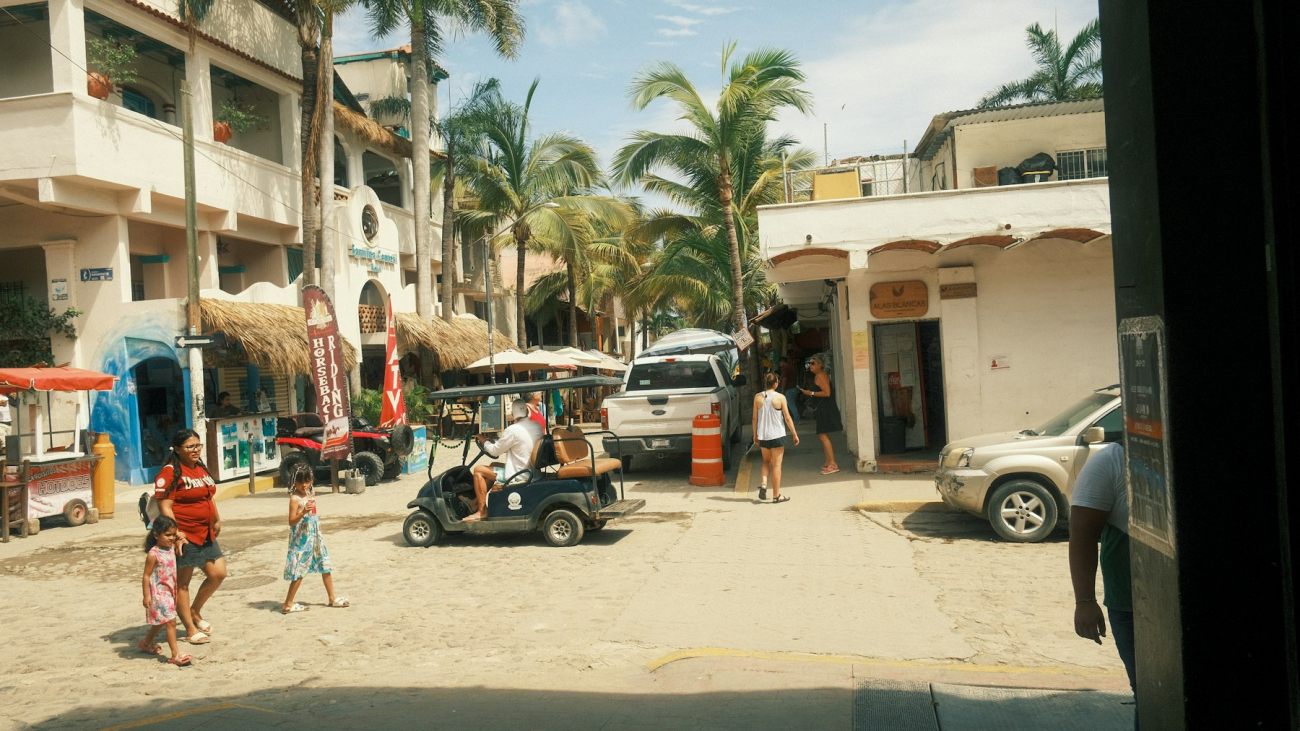
If you’re planning a trip to Sayulita, “is Sayulita safe?” is probably one of your first questions — and it’s a fair one to ask before you book. The short answer: yes, Sayulita is a low-risk, well-traveled destination, and the vast majority of visits here are completely uneventful. But “safe” doesn’t mean “nothing to think about,” so here’s an honest, practical rundown.
The General Picture
Sayulita is a small, walkable beach town that’s been welcoming travelers, surfers, and expats for decades. It’s not a high-crime destination, and violent crime against tourists is rare. The things worth knowing about are the ordinary, common-sense risks you’d plan around in any beach town — not anything unique to Mexico.
What to Actually Watch For
- Petty theft. Like any busy beach town, crowded spots — the main beach, the plaza, market stalls — are where bags get left unattended and phones get pickpocketed. Keep valuables in a hotel safe and don’t flash cash or jewelry in crowds.
- Ocean conditions. Sayulita’s main beach is a real surf break, with currents that can catch swimmers off guard, and hurricane season runs roughly June through November. Ask about conditions before you swim or surf, and don’t go in alone if the surf looks rough.
- Getting around at night. Stick to the well-lit main streets and the plaza area after dark, same as you would in any unfamiliar town, and skip the remote jungle paths and quiet side streets once the sun’s down.
- Transportation. If you take a taxi or golf-cart taxi, agree on the fare before you get in. Most are perfectly legitimate, but it avoids any awkward surprises.
- Tap water. Like most of coastal Mexico, stick to bottled or filtered water.
What the Official Advisories Say
As of this writing, the U.S. State Department rates the state of Nayarit at Level 2, “exercise increased caution” — the same tier as much of Europe — with no restrictions on U.S. government employees travelling in the state. Canada’s advisory asks visitors to Mexico as a whole to “exercise a high degree of caution”; its regional “avoid non-essential travel” warning for Nayarit applies only to a strip within 20 km of the Sinaloa and Durango borders, hundreds of kilometers from Sayulita. Both governments recommend not driving at night, using marked taxis, and carrying insurance that covers medical evacuation. Advisories change, so check the current text before you fly.
If Something Goes Wrong
The emergency number in Mexico is 911. In town, the private Sayulita Health Clinic at the Pemex entrance is open 24 hours with English-speaking staff, X-ray, lab and an ambulance; there are also house-call doctors and several pharmacies. The public hospital in San Pancho is about ten minutes north for emergencies. For anything serious, the private hospitals are south: Hospital CMQ Riviera Nayarit in Bucerías (roughly 35–45 minutes), Punta Mita Hospital, and the big Puerto Vallarta hospitals about an hour away. Dengue is around in the June-to-October wet months — use repellent at dusk — and it is a good habit to shake out shoes and towels for scorpions.
Cash, Cards and ATMs
Sayulita is still a cash town. The one bank branch on Avenida Revolución (long known as Intercam; the branch changed hands in 2025) has ATMs that run out of cash on busy weekends, and the free-standing machines around town charge steep fees and are the ones locals warn about for card skimming. Use a bank ATM, decline “dynamic currency conversion” when the screen offers to charge you in dollars, bring enough pesos for the weekend, and expect a surcharge when you pay by card. See our street-food guide for why that matters.
Beach and Wildlife, Specifically
Sayulita has no year-round lifeguards; the rescue towers on the main beach were put up by volunteers after past drownings, and rip currents can be strong, especially near the river mouth and on big-swell days. In the warmer months stingrays rest in the shallows — shuffle your feet as you walk in — jellyfish show up as the water warms in spring, and sea urchins on the rocks near the main break cause more injuries than anything else in the sea here. Los Muertos is the calm swimming beach. Sun and heat are the everyday risk: shade, water and a hat.
Roads, Golf Carts and Storm Season
Rented golf carts are restricted to town limits (rental companies charge a retrieval fee if you take them onto the highway) and the unlit speed bumps are the main night-time hazard; scooters are the same story. Skip Highway 200 after dark. The Pacific hurricane season runs mid-May to November; storms usually pass offshore (Hurricane Priscilla in October 2025 brought rough surf and localized flooding around the bay but no direct hit), and the practical effects are power cuts and a couple of washed-out days rather than danger. One thing you can stop worrying about: the “tourist tax” you may have read about (VISITAX) applies only to Quintana Roo on the Caribbean side, not here.
Our Take, Staying at the Villa
Villa Vargas is in a quiet, residential part of town — close enough to walk to the plaza, restaurants, and beach in a few minutes, but away from the busiest, most crowded stretch. That’s a meaningful safety plus on its own: less crowd noise means less opportunity for the petty theft that happens in packed tourist areas, and you’re not navigating unfamiliar streets late at night to get back to where you’re staying.
Bottom Line: Is Sayulita Safe?
Treat Sayulita the way you’d treat any beach town you don’t know yet — keep an eye on your things, respect the ocean, and use good judgment after dark — and you’ll have a completely safe, relaxed trip.
Ready to book your stay? See our accommodations or book directly and save on fees.
Traveling with kids? See our complete guide to Sayulita for families, including more on staying safe with children.